

In basketball, many players concentrate on shooting or strength training but often overlook two critical components of athletic excellence—agility and footwork. These skills form the foundation for quick reactions, balance, and precise movement on the court. Strong footwork allows you to move efficiently in every direction, while agility ensures you can adapt to the unpredictable flow of the game. Together, they shape a player’s ability to perform under pressure, make sharp cuts, and maintain control during fast-paced play.
Why Agility and Footwork Matter in Basketball
Agility and footwork are more than just fitness traits—they are performance enhancers that affect every aspect of your game. Developing these skills enables smoother transitions, sharper defense, and more effective offense. Here’s how they make an impact:
1. Defensive Versatility
Players with superior agility can guard multiple positions and react quickly to opponents’ movements. Good lateral footwork helps defenders stay in front of attackers, switch on screens, and close gaps effectively.
2. Creating Separation
Quick, controlled footwork helps offensive players generate space from defenders, leading to better shooting angles, open passing lanes, and clear drives to the rim.
3. Evasive Movement
In tight situations, smart footwork allows players to pivot, spin, and maneuver away from pressure. This is especially valuable for guards handling the ball in traffic or initiating plays.
4. Fast Transitions
Agile players can shift between offense and defense seamlessly, giving them a major edge during fast breaks or when recovering on defense.
5. Balance and Control
Proper footwork contributes to a strong base, improving stability during layups, jump shots, or post moves. With better balance, players can shoot accurately and maintain composure through contact.
6. Injury Prevention
Efficient movement patterns reduce unnecessary strain on joints and muscles. Agility drills enhance coordination and body awareness, helping players avoid awkward landings and collisions that lead to injuries.
Key Drills to Develop Agility and Footwork
1. Lateral Defensive Slides
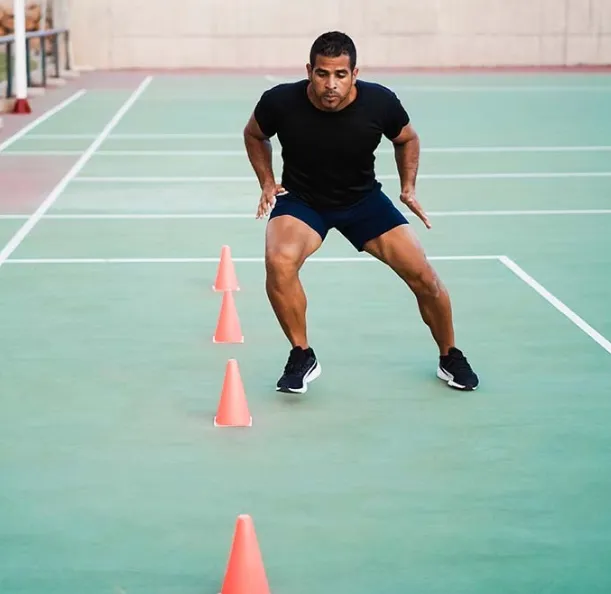
Begin in a defensive stance with your knees bent and weight centered on the balls of your feet. Slide laterally across the court without crossing your feet or rising out of position. Focus on quick, controlled movements that maintain defensive form. This drill enhances lateral quickness and helps you stay balanced when guarding opponents.
2. Agility Ladder Exercises
Lay an agility ladder flat on the floor and perform patterns like high knees, in-and-out steps, or side shuffles. Concentrate on staying light on your feet while maintaining rhythm and precision. As you progress, increase speed or incorporate basketball movements like pivoting and cutting.
3. Cone Zigzag Drills
Set up cones in a zigzag formation across the court. Dribble through them, changing direction sharply around each cone. Keep your dribble tight and your movements explosive. This drill builds coordination and mirrors real-game directional changes when driving to the basket or evading defenders.
4. Mirror Footwork Challenge
Work with a partner, standing a few feet apart. One player leads with quick shuffles, hops, and pivots while the other mirrors every move. Switch roles after a set time. This drill strengthens reaction speed and helps simulate the read-and-react nature of defense.
5. Shuttle Sprints
Place two cones several feet apart. Sprint from one cone to the other, touch the floor, and sprint back. Repeat continuously for several rounds. Focus on explosive starts and controlled stops. This exercise improves both acceleration and directional change, key elements for fast breaks and recovery defense.
Frequently Asked Questions
What mistakes should I avoid when training for agility and footwork?
Avoid standing too upright, neglecting a low stance, or moving without control. Prioritize precision over speed—sloppy footwork limits effectiveness and increases injury risk.
How often should I practice these drills?
Incorporate agility and footwork training two to three times a week, depending on your schedule and conditioning level. Consistency is more important than duration; even short, focused sessions can lead to significant improvement.
Can these drills help prevent injuries?
Yes. Enhanced balance, coordination, and movement efficiency reduce stress on joints and muscles. Proper training lowers the likelihood of ankle sprains, knee strains, and other common basketball injuries.
Are certain drills better for beginners or advanced players?
Beginners should focus on basic movements like ladder footwork and simple cone drills. As players improve, they can integrate more complex exercises involving defensive slides, reaction-based movements, or game-speed situations. The key is to build progressively while maintaining proper technique.
Final Thoughts
Agility and footwork are the silent engines behind every great basketball performance. They dictate how smoothly you move, how quickly you react, and how confidently you execute. Incorporating these drills into your routine will not only improve your speed and control but also make you a more complete and dependable player. The next time you step on the court, remember—your feet are the foundation of your game. Train them with purpose, and your entire performance will rise with them.